














Firewalls
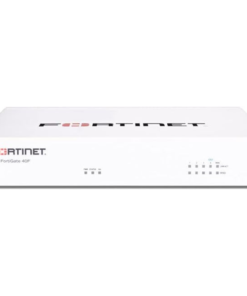



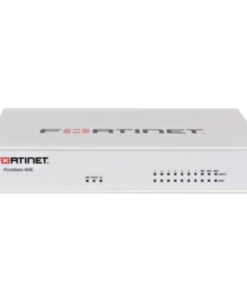
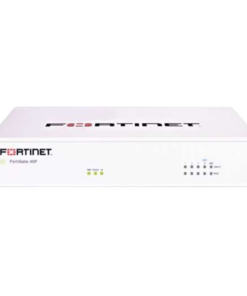
Fortinet Firewalls are next-generation security appliances built around FortiGate hardware, combining firewall, VPN, intrusion prevention, and AI-driven threat detection in a single device. Jazz Cyber Shield carries 100+ authorized Fortinet Firewall models, from compact branch-office units under $300 to high-throughput appliances built for data centers and large enterprise networks.
Choosing the right Fortinet Firewall mainly comes down to three factors: how many users and devices the network supports, how much throughput is needed once security features like SSL inspection are turned on, and whether the deployment is a single office or multiple branch locations that need centralized management. The sections below break this down by business size, with specific FortiGate models currently available through Jazz Cyber Shield.
A Fortinet Firewall — built on FortiGate hardware — inspects network traffic in real time and blocks threats before they reach internal systems. Unlike a traditional firewall that only filters traffic by port and IP address, a Fortinet next-generation firewall (NGFW) adds deep packet inspection, application control, intrusion prevention (IPS), and SSL/TLS inspection, all processed through Fortinet's Security Processing Units (SPUs) for hardware-accelerated performance. This matters practically because software-only firewalls often slow down once encrypted traffic inspection is enabled — Fortinet's dedicated security chips keep throughput high even with full inspection turned on.
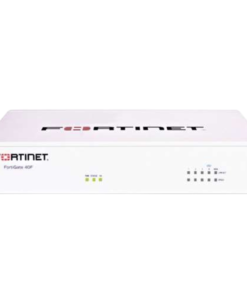
For small businesses and branch offices with roughly 10–50 users, entry-level FortiGate models handle standard internet security, VPN, and basic threat protection without requiring a dedicated IT security team. The FortiGate 40F is a compact, affordable starting point for very small offices, while the FortiGate 60F and 61F step up throughput and port count for slightly larger teams. For locations needing built-in wireless alongside firewall protection, the FortiWiFi 60F (FWF-60F) combines both in one appliance, removing the need for a separate access point.
Quick picks for small business:
Mid-sized organizations — typically 50–250 users — need higher throughput to handle more simultaneous VPN connections, more concurrent SSL inspection, and often multiple internet connections for redundancy. The FortiGate 70F and 81F sit in this range for growing offices, while the FortiGate 100F and 200F move into higher-throughput territory suited to organizations running more demanding applications or larger VPN user counts, including hybrid and remote-work setups.
Quick picks for mid-sized business:
Large enterprises and data centers need firewalls rated for very high throughput, large numbers of concurrent sessions, and often redundant power supplies for uptime. FortiGate 600F and 1000F-series appliances are built for this scale, handling heavier SSL inspection loads and higher session counts without becoming a network bottleneck. These deployments typically pair the firewall with FortiManager for centralized policy control across multiple sites and FortiAnalyzer for log analysis and compliance reporting.
Quick picks for enterprise:
| Model | Best For | Typical Deployment | Notable Feature |
|---|---|---|---|
| FortiGate 40F | Very small office | Branch/home office | Compact, entry-level NGFW |
| FortiGate 60F | Small office | Small business | Balanced throughput and price |
| FortiGate 61F | Small-mid office | Small business | Higher port count |
| FortiWiFi 60F (FWF-60F) | Small office needing Wi-Fi | Branch office | Built-in wireless + firewall |
| FortiGate 80F-PoE | Small office with PoE devices | Branch office | Powered Ethernet ports |
| FortiGate 70F | Growing office | Mid-size business | Higher session capacity |
| FortiGate 81F | Growing office | Mid-size business | Higher VPN throughput |
| FortiGate 100F | Mid-size business | Office/hybrid workforce | Strong SSL inspection performance |
| FortiGate 200F | Larger mid-size network | Office/data-heavy use | Higher throughput ceiling |
| FortiGate 600F | Enterprise | Large single-site network | High session capacity |
| FortiGate 1000F | Enterprise/data center | Data center | High-throughput, redundant hardware options |
Note: confirm exact throughput (Gbps), VPN user limits, and current pricing for each model against Jazz Cyber Shield's live product pages before publishing, so the table stays accurate.
A traditional (stateful) firewall filters traffic based on source, destination, port, and protocol — useful, but blind to what's actually inside the traffic. A Fortinet Firewall, as a next-generation firewall, adds application-layer inspection, meaning it can tell the difference between safe and malicious traffic even on commonly used ports, block specific applications (like unauthorized file-sharing tools), and inspect encrypted HTTPS traffic for hidden threats. This is the core reason most compliance frameworks and cyber-insurance policies now expect a next-generation firewall rather than a basic port-filtering device.
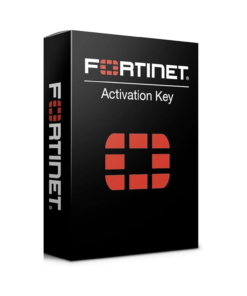
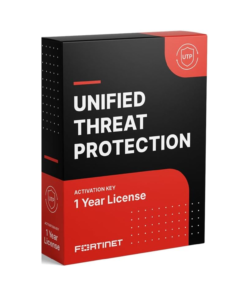
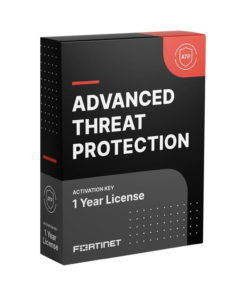
Fortinet Firewalls are often sold as bundles — hardware plus a term license (commonly 1, 3, or 5 years) covering FortiGuard security services such as antivirus, IPS, web filtering, and application control updates. Without an active FortiGuard subscription, the firewall hardware still functions, but it stops receiving the threat-intelligence updates that keep protection current against new attacks. When comparing prices, it's worth checking whether a listed price includes the bundle license or hardware only, since the ongoing subscription is what keeps a Fortinet Firewall genuinely effective over time rather than just on day one.
Separate from network-edge FortiGate firewalls, Fortinet also offers a Web Application Firewall (WAF) designed specifically to protect websites and web applications from threats like SQL injection, cross-site scripting (XSS), and DDoS attacks. Fortinet WAF adds bot management and API protection on top of standard traffic filtering, which matters for businesses running customer-facing web applications or APIs that a standard network firewall isn't designed to inspect at the application layer.
Organizations running more than one FortiGate device — across multiple offices or a headquarters-plus-branches setup — typically add FortiManager to push consistent security policy across every unit from a single console, instead of configuring each firewall individually. FortiAnalyzer complements this by centralizing logs from all connected FortiGate units, which supports both faster incident investigation and the reporting most compliance frameworks require. For a single-location deployment, both tools are optional; for multi-site businesses, they generally save significant ongoing admin time.
Most Fortinet Firewall deployments fall into a few recognizable patterns, and knowing which one applies helps narrow model choice quickly. A single-office deployment routes all internet and internal traffic through one FortiGate unit at the network edge — the simplest setup, common for the small and mid-size business models covered above. A branch-office deployment uses one FortiGate per location, each connected back to headquarters over site-to-site VPN, which FortiGate supports natively without needing separate VPN hardware.
A hybrid or remote-workforce deployment adds SSL-VPN or IPSec VPN client access so remote employees connect securely into the office network, which is one of the most common reasons businesses upsize from an entry-level model like the 40F to something with more VPN throughput, such as the 70F or 100F — encrypted VPN traffic adds processing overhead that entry-level units aren't built to absorb at scale. A data center deployment typically pairs a high-throughput model like the 600F or 1000F with redundant power and, often, a second unit in a high-availability (HA) pair so the network stays protected even if one appliance fails.
Fortinet regularly releases FortiOS firmware updates that patch vulnerabilities and add features, and keeping firewalls current is one of the most important — and most commonly neglected — parts of network security. An unpatched firewall with an expired FortiGuard license is effectively running yesterday's threat intelligence against today's attacks. Most businesses either assign this to internal IT or use a managed service arrangement, where a reseller or MSP handles firmware updates, license renewals, and periodic configuration review as part of ongoing support — which is part of what Jazz Cyber Shield's support team helps coordinate for customers who don't have a dedicated in-house security team.
For businesses where network downtime directly costs money — e-commerce, healthcare, financial services — a single firewall is a single point of failure. Fortinet supports HA pairing, where two identical FortiGate units share configuration and automatically fail over if one goes down, keeping the network protected and online without manual intervention. This is typically added at the mid-size and enterprise tier (100F and above) rather than for small branch offices, where the cost of a second unit usually outweighs the downtime risk for a single small location.
Jazz Cyber Shield is a US-based authorized Fortinet reseller, which means every Fortinet Firewall sold is sourced through official distribution channels — not gray market. That matters specifically for Fortinet hardware because FortiGuard licensing and warranty support are tied to authorized sale records, and gray-market units can run into registration issues with Fortinet's licensing system. Orders ship from St. Petersburg, Florida, with nationwide US delivery, and the Jazz Cyber Shield team provides setup, configuration, and ongoing support guidance — helping match firewall throughput and licensing to actual network needs before purchase, not after a bottleneck shows up in production.
A Fortinet Firewall protects a business network by inspecting incoming and outgoing traffic, blocking malware and intrusion attempts, enforcing VPN access for remote workers, and controlling which applications and websites are allowed on the network.
For small businesses under about 50 users, the FortiGate 40F, 60F, or 61F are common starting points, offering next-generation firewall protection without enterprise-level cost or complexity.
Yes — full protection requires an active FortiGuard license (typically sold in 1, 3, or 5-year terms) covering antivirus, intrusion prevention, and web filtering updates. The hardware works without it, but threat protection stops updating.
A Fortinet Firewall (FortiGate) protects the network edge and internal traffic. A Fortinet Web Application Firewall (WAF) protects websites and web applications specifically from threats like SQL injection and XSS attacks — they serve different layers of security.
A single FortiGate unit typically serves one location. Multi-site businesses usually deploy one FortiGate per site and manage them centrally using FortiManager, rather than routing all locations through one physical firewall.
Throughput needs depend on user count, internet connection speed, and whether SSL inspection is enabled (which reduces effective throughput). As a rough guide, small offices generally need less than 1 Gbps of inspected throughput, while mid-size and enterprise networks often need several Gbps or more.
Yes — units are sourced through authorized distribution, so standard Fortinet manufacturer warranty and FortiGuard licensing support apply.
Yes — the Jazz CyberShield team offers installation, configuration, and ongoing support guidance for FortiGate, FortiAnalyzer, and FortiManager deployments.
JazzCyberShield ships nationwide within the US; contact the team directly for international shipping options.
Yes — most FortiGate models from the mid-size tier upward support HA pairing, where two units share configuration and automatically fail over to keep the network online if one device fails.